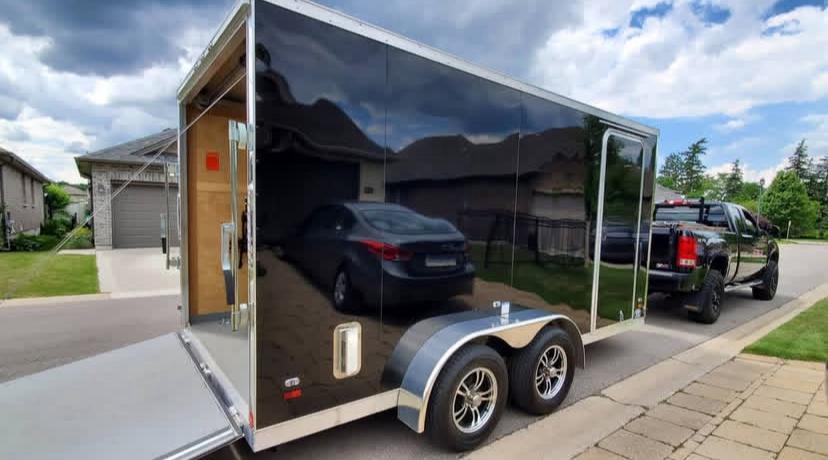


| Spec / Characteristic | Description / Why It Matters |
|---|---|
| Trailer Size (Length, Width, Height / Interior Dimensions) | Determines how much cargo you can carry; whether large items or vehicles will fit. Taller walls allow stacking or taller equipment. Width affects towing demands and whether legal width limits are exceeded. |
| Gross Vehicle Weight Rating (GVWR) | Maximum loaded weight (trailer + contents) the trailer is rated for. Ensures safe towing and compliance with laws. Exceeding GVWR is dangerous and often illegal. |
| Tongue / Hitch Type | The part of the trailer that connects to the towing vehicle. Common types include bumper pull, gooseneck, or fifth-wheel. The hitch design affects stability, turn radius, load distribution. |
| Axle Configuration (Single, Tandem, Triple Axle) | More axles = higher payload capacity, better stability, smoother ride. But more axles add cost, maintenance, and weight. |
| Suspension Type | Typical types: leaf-spring, torsion, and air-ride. Each has trade-offs of cost, ride smoothness, maintenance, loading height. E.g. torsion suspensions are smoother and quieter; leaf springs are common and cheaper. |
| Frame / Chassis Construction | Steel vs aluminum vs mixed. Heavy-duty steel frames are durable but heavier and rust-prone; aluminum is lighter and more expensive, often better for corrosion resistance. Also, frame crossmembers and main rails: tube steel, I-beam, etc. |
| Walls / Roof / Floor Materials | Typical walls: plywood, aluminum or steel skin; roof often aluminum or steel; flooring might be ¾-inch hardwood, engineered decking, aluminum plate; strength, weight, durability, ease of repair matter. |
| Doors / Access | Rear ramp door or barn doors are common; side entry door for personnel access; roof vent(s) or windows; door size must accommodate largest items you load. Spring-assist ramps ease operation. |
| Tie-Downs / Interior Securing Points | Heavy cargo, vehicles or machinery require reliable tie-downs, D-rings, tracks. Location (floor, walls), strength and spacing are important. |
| Ventilation / Climate Control | Vents (sidewalls, roof) to allow airflow; insulation to control heat or cold; possibly built-in heaters or AC for sensitive cargo. Prevents condensation, damage or spoilage. |
| Lighting & Electrical System | Exterior lights (signal, brake, tail), interior lighting for loading / inspections; possibly power outlets, wiring for accessories; durable and weather protected wiring. |
| Braking System | Trailers of certain GVWR require brakes. Can be electric brakes, hydraulic surge brakes etc. Good braking is essential for safety. |
| Tires / Wheels / Axles Ratings | Properly rated tires and wheels to carry the designed load. Axle ratings must match or exceed expected load. Proper weight distribution front-to-rear and side-to-side matters. |
| Weight Distribution & Center of Gravity | The placement of cargo affects tow stability. Heavy items should be located over or near axles; tongue weight must be correct; avoid overloading any axle. |
| Exterior Features & Finish | Skin material, colors, panels, protective trim (rub rails, fenders), corners, roof shape (flat, V-nose); finishing affects durability, weather resistance, resale value. |
| Security Features | Locking doors (rear and side), strong latches, possibly reinforced panels, hidden compartments, maybe alarms or GPS tracking depending on value of cargo. |
Be the first to review “Enclosed Trailers”
Related products

Uncategorized


Uncategorized


Uncategorized
Uncategorized

Uncategorized

Uncategorized

Uncategorized

Uncategorized
Reviews
There are no reviews yet.